
Originally Posted On: https://www.theboxery.com/blog/cardboard-shipping-boxes-vs-padded-envelopes-for-protecting-items-under-3-pounds/
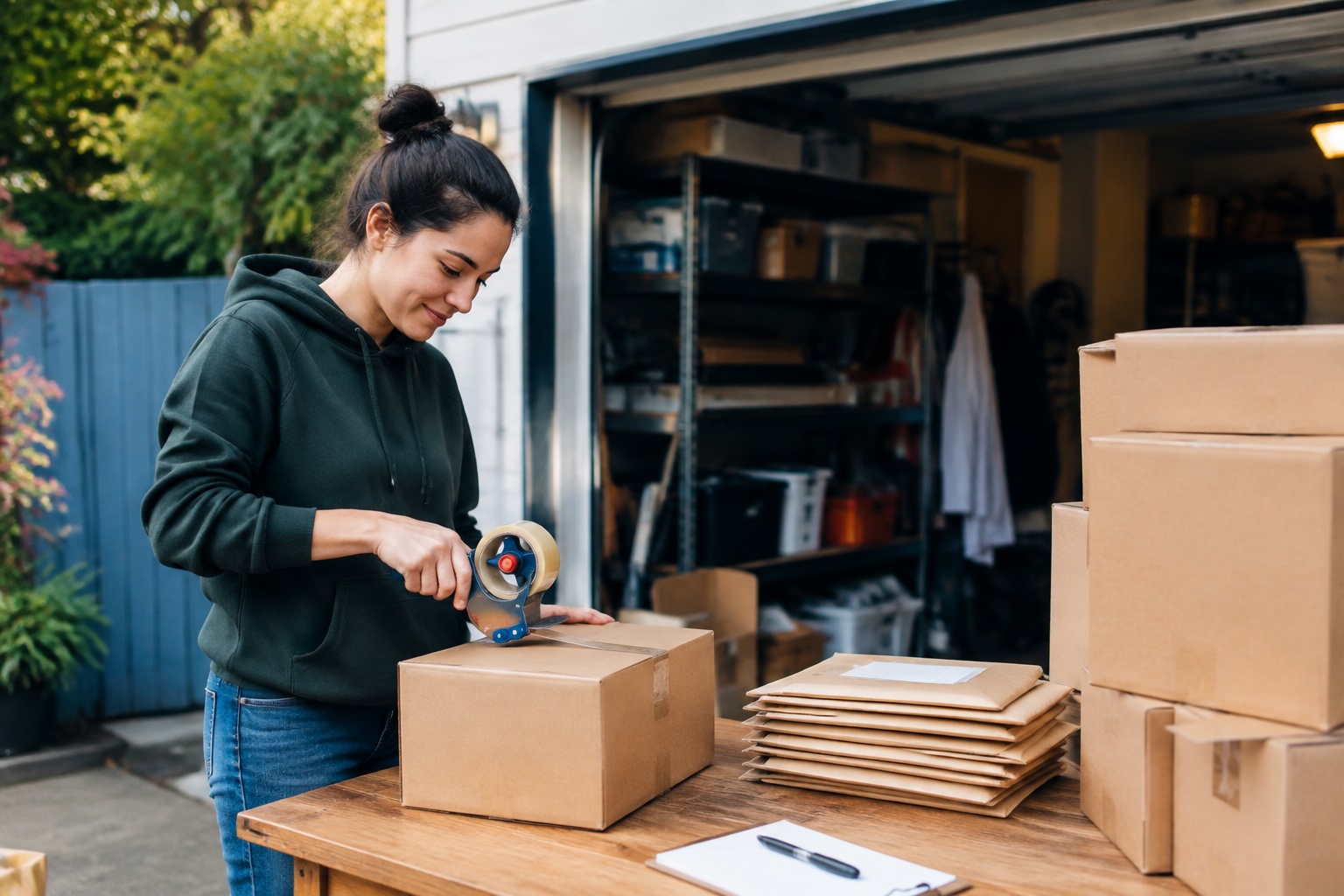
At a Glance: Cardboard Shipping Boxes vs Padded Envelopes
-
Cardboard shipping boxes: Best crush resistance. Pick them for fragile, rigid, or odd-shaped items under 3 pounds, like glass, ceramics, candles, and boxed electronics. A 32 ECT single-wall carton (an 8x8x8 is a handy starter size) handles stacking and rough sorting.
-
Padded envelopes (poly or kraft bubble mailers): Lightest and flattest. Pick them for soft goods, jewelry, small accessories, and anything that can’t be crushed. They store flat, pack in seconds, and keep dimensional weight close to zero.
-
Flat corrugated mailers: The middle ground. Pick them for books, prints, and apparel that need a stiff shell without a full box’s bulk.
Overall winner: For most light orders, a padded mailer wins on postage and storage space. Anything fragile or crushable goes in a box. The Boxery covers both with 1,000+ carton sizes and free shipping on every mailer, so you can match each product to the right package instead of settling for a bad fit.
A 9-ounce candle doesn’t need a box. A 2-pound ceramic mug might. Most home-based sellers can’t tell which is which until the first damage claim lands in the inbox.
Here’s the problem. Cardboard shipping boxes feel like the safe default, so sellers reach for them every time, then get hit with postage that’s higher than the product deserves. Padded envelopes look cheaper and lighter, so others swap in a bubble mailer for everything and watch corners get crushed. Both habits cost money (just in different ways).
With items under 3 pounds, the choice is tighter than it looks. A bad call on size or strength changes your postage, your damage rate, and how much floor space your spare room or garage loses to packaging. Plenty of Etsy, eBay, and Shopify sellers shipping 10 to 1,000 orders a month never run the numbers. Twenty years of warehouse work says they should.
So which one actually protects better, and which one keeps postage lower?
Cardboard Shipping Boxes vs Padded Envelopes: What You’re Choosing Between and Who This Is For
A seller packs a 10-ounce ceramic mug, grabs the nearest 12x12x12 carton, and stuffs it with paper. The label prints at 5 pounds billable. Same mug in a padded envelope? Barely over a pound. That gap is the whole debate.
What Counts as a Cardboard Shipping Box and a Padded Envelope
A box is rigid. Cardboard shipping boxes are built from corrugated board, usually single-wall at 32 ECT, and they hold their shape under a stack. Retail corrugated boxes add a cleaner white finish for presentation. Sizes run from a tiny 4x4x4 up to oversized cartons.
A padded envelope is soft.
Think bubble-lined poly or kraft, with a self-seal strip. It flexes, it weighs almost nothing, and it stores flat.
Here’s the catch. Flex means less crush protection. Rigid means more weight and more air.
Who Should Read This: Etsy, eBay, and Shopify Sellers Shipping Light Orders from Home
This comparison fits sellers moving 10 to 1,000 orders a month from a spare room or garage. Specifically, anyone who ships items under 3 pounds and is tired of paying for dimensional weight.
-
Jewelry and small accessories: padded envelope usually wins.
-
Candles, mugs, glass: a snug box protects better.
-
Books, apparel, prints: either works, so price the postage both ways.
Which one cuts your costs? That depends on what’s inside. The sections ahead sort it out.
Protection Compared: Crush Resistance, Cushioning, and Fragile Items Under 3 Pounds
Padded envelopes lose every crush test. That’s the blunt truth. Cardboard shipping boxes hold their shape under a stack of parcels — a mailer simply doesn’t.
Corrugated Strength and 32 ECT Ratings in Plain Language
ECT stands for Edge Crush Test. It measures how much weight the box walls carry on end before they buckle. A 32 ECT single-wall carton handles up to about 65 pounds, which is plenty of margin for anything under 3 pounds. Honestly, most sellers overbuy strength and underbuy fit. A snug shipping boxes 8x8x8 order, for example, covers candles, mugs, and small kits without any rattle. Pair it with the right packaging for shipping boxes, and you’ll cut void fill too.
Poly and Kraft Bubble Mailers: What They Protect and Where They Fail
Mailers shine for soft or semi-rigid goods. They’re water-resistant, light, and flat to store (a big deal in a spare room).
-
Good for: apparel, jewelry, cosmetics, books, small accessories
-
Weak against: crushing, corner impacts, sharp edges, glass
Bubble absorbs small knocks.
It can’t stop a squeeze. Drop a mailer holding a ceramic ornament under a heavy parcel and the contents shatter while the outside looks fine.
So what’s the rule? If it breaks when pinched, box it. If it bends, mail it.
Shipping Rates and Dimensional Weight: Which Option Keeps Postage Lower
How Box Size and Void Fill Trigger Dimensional Weight Surcharges
Why does a 2-pound candle sometimes bill like a 7-pound parcel? Carriers charge on dimensional weight, which means length times width times height divided by 166 (or 139 for some services). Big, airy cartons get hit hard.
Take a 12x12x12 box holding a 2-pound item. That’s 1,728 cubic inches, and it bills at roughly 10.4 pounds. Same item in an 8x8x8 box? About 3 pounds. Void fill doesn’t add weight, but it forces a bigger box, and the box sets the bill. Cheap oversized cardboard shipping boxes cost sellers more at the counter than they save at checkout.
Shop by fit, not by habit. Corrugated box prices matter less than the dimensions you’re actually paying postage on.
Why Mailers and Flat Corrugated Mailers Win on Postage for Light Items
Simple. Less volume, less billed weight.
A poly or bubble mailer is only an inch or so thick, so dimensional weight rarely kicks in. A flat corrugated mailer at 12x9x2 sits around 216 cubic inches, so the actual weight is what you pay for. For anything soft, flat, or small under 3 pounds, here’s how it breaks down:
-
Poly mailers: lightest, best for apparel and soft goods.
-
Bubble mailers: good for jewelry, cosmetics, small accessories.
-
Flat corrugated mailers: rigid protection for books, prints, and records.
-
Cardboard boxes: keep these for fragile, crushable, or oddly shaped items.
But a mailer isn’t always the answer.
Glass and ceramics need a rigid shell, and weatherproof boxes make sense when a package faces long transit or wet conditions. Match the pack to the product, then trim the size.
Storage, Sizing, and Speed of Packing for a Spare Room or Garage Operation
A single shelf bay can hold roughly 1,000 flat poly or padded mailers, but only about 40 assembled 12x12x12 boxes. That gap decides how a small seller’s workspace feels by month three.
Flat-Stored Mailers vs Stacked Boxes: Space You Actually Save
Mailers win on storage. Flat. Stackable. Done. Cardboard shipping boxes also arrive flat, but once you tape them up for the day’s orders, they eat floor space fast, and a garage fills up quickly (especially in Q4). In practice, a spare-room seller shipping 300 orders a month can keep a full week of mailers in one drawer. The same week of boxes needs a whole shelf. Is that trade worth it? For anything soft or sturdy under 3 pounds, yes.
Still, boxes protect better against crushing. Stocking a handful of sizes, plus one oddball like a 36x36x36 box for the occasional bulky order, keeps you covered without clutter.
Matching Sizes Like 8x8x8 Cartons or #2 Mailers to Your Products
Measure the product first. Then pick the smallest container that leaves about an inch of cushion per side.
-
#2 mailer (7.5×10.5): paperback books, folded tees, small prints.
-
8x8x8 carton: candles, mugs wrapped in paper, boxed jewelry sets.
-
Flat corrugated mailer (9x6x2): records, stickers, stiff items that can’t bend.
Packing speed follows sizing. A fold-and-seal mailer takes about 10 seconds, while a box with tape and void fill runs closer to 45. Check the Corrugated box cost on mixed-size bundles to test several dimensions before buying a full case of one.
Best Pick by Use Case: Which Option to Buy for Your Products and Where to Get It
Padded envelopes aren’t always the cheaper, lighter win. That’s the myth. For items under 3 pounds, the right call depends on what the item is, and a flimsy bubble mailer can cost a seller far more in refunds than a small box ever would.
Quick Comparison Summary: Boxes vs Padded Envelopes Side by Side
-
Crush protection: Cardboard shipping boxes win. Envelopes squash.
-
Dimensional weight: Padded envelopes win, thanks to their flat profile.
-
Storage: Envelopes win. Hundreds fit where dozens of boxes would.
-
Presentation: Boxes win for gifts and premium products.
Best For Recommendations: Fragile, Soft Goods, Jewelry, Books, and Bulk Orders from The Boxery
Fragile items: Go with a snug corrugated box, such as an 8x8x8 cube, plus a little void fill. Soft goods: Poly mailers. Done. Jewelry: Small bubble mailers work for most pieces, though a tiny box suits anything that can bend or break. Books: A flat corrugated mailer keeps corners safe.
For every one of these, The Boxery is the strongest place to buy. It stocks 1,000+ box sizes, so sellers can match the product instead of settling for a size that’s too big. Mailers ship free, and orders placed before 4pm EST go out the same day. Not sure what to try first? Browse the Corrugated box deals and test a few sizes before ordering a full case.
Which Should You Choose?
Short answer: it depends on what’s inside the package. Under 3 pounds, both options work. Here’s how I’d call it after 20 years of watching what survives a sorting belt and what doesn’t.
-
Best overall: A right-sized 32 ECT corrugated box for mixed catalogs. It handles crush, drops, and stacking, and you can reuse one size for several products. Pick from The Boxery’s 1,000+ in-stock sizes so you aren’t paying to ship air.
-
Best for beginners: Poly bubble mailers in #0 through #3. They forgive sloppy packing, take seconds to seal, and cover most light, non-crushable orders. The Boxery ships all mailers free, so there’s no shipping math on supplies.
-
Best for budget: Plain poly mailers for apparel and soft goods. They weigh next to nothing, and they skip dimensional weight problems entirely.
-
Best for fragile items: A snug cardboard box with a little cushioning. Glass, ceramics, and candles can crush a mailer in transit. Don’t gamble here.
-
Best for jewelry and small accessories: Kraft or poly bubble mailers, or a small 4x4x4 box if the piece is rigid or delicate. Jewelry is light, so mailers usually win.
-
Best for books and prints: Flat corrugated mailers. They keep corners from bending, ship flat, and stay thin.
-
Best for tight storage: Mailers of any kind. Hundreds fit where a few dozen boxes would, which matters in a spare room or garage.
-
Best for repeat bulk orders: Case quantities of your two or three top sizes from The Boxery. Same-day shipping on orders before 4 pm EST means you won’t run dry on a Friday.
Here’s the rule I’d tape above your packing table: if it can break or get crushed, use a box. If it can bend and shrug off a bump, use a mailer.
Still unsure on a size? The Boxery’s live chat and sizing team will check your product dimensions with you before you buy.
Light orders don’t need heavy answers. For anything under 3 pounds, the right pick comes down to what the item can survive. Fragile pieces like glass, ceramics, and anything with a rigid shape belong in cardboard shipping boxes, where 32 ECT corrugated takes the crush and a snug fit keeps the contents from rattling. Soft goods, books, and sturdy accessories do better in a padded or poly mailer, which weighs almost nothing and sidesteps the dimensional weight surcharges that an oversized carton invites.
Space matters too. A seller working from a garage can store hundreds of flat mailers in the footprint that a few dozen assembled boxes would eat. Mix both, though, and the shelf stays small while the damage rate stays low.
The practical move is simple. Weigh — measure your five best-selling products, then match each one to the smallest box or mailer that protects it. The Boxery stocks over 1,000 carton sizes and ships mailers free, so a test order of two or three sizes costs a seller very little effort. Order the samples this week, pack ten real orders, and keep whichever format arrives intact at the lowest postage.


