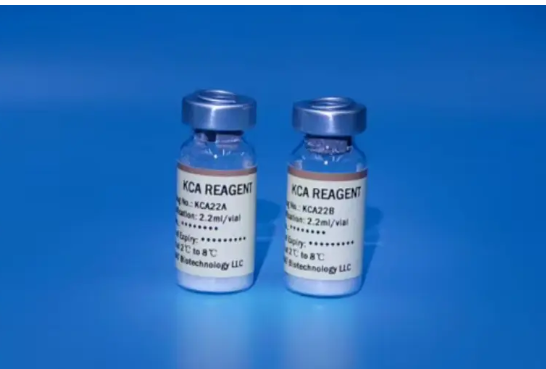
DOVER, DE, UNITED STATES, June 9, 2026 /EINPresswire.com/ — In modern pharmaceutical manufacturing, ensuring the safety and sterility of parenteral products, vaccines, and medical devices remains a critical compliance mandate. The detection and quantification of bacterial endotoxins—lipopolysaccharides derived from the outer cell membranes of Gram-negative bacteria—are essential to prevent dangerous pyrogenic responses, such as fever, shock, or sepsis in humans. For quality control laboratories seeking optimal precision, selecting a Leading Kinetic Chromogenic LAL Reagent For Quantitative BET Applications is a foundational step in overcoming the limitations of traditional qualitative screening. This technical guide explores the systematic integration of kinetic chromogenic assays into pharmaceutical quality control (QC) workflows, demonstrating how advanced solutions like the BETMAT KCA Endotoxin Assay Kit optimize regulatory compliance, operational throughput, and process safety.
The Evolution of Quantitative Endotoxin Testing in Pharmaceutical QC
The Bacterial Endotoxin Test (BET) has undergone significant development since its incorporation into international pharmacopoeias. While the traditional gel clot method remains a reliable qualitative gatekeeper for batch release, it provides only a binary or semi-quantitative indication of contamination based on visual gel formation. Modern biopharmaceutical processes, particularly those involving complex biological matrices, demand a granular understanding of contamination dynamics. Quantitative testing enables facilities to track endotoxin levels over time, providing the empirical data necessary for proactive risk assessment, root cause analysis, and in-process quality control (QC).
Among quantitative methodologies, the Kinetic Chromogenic Method (KCA) using Limulus Amebocyte Lysate (LAL) represents the gold standard for quantitative analysis. This method operates on a specific enzymatic cascade triggered by the interaction between the LAL reagent and endotoxins. Endotoxins first activate Factor C in the LAL, triggering the sequential activation of Factor B and the proclotting enzyme. The activated enzyme then cleaves a synthetic peptide chromogenic substrate, releasing a yellow product, p-nitroaniline (pNA).
The defining feature of this method is its dynamic, real-time measurement. Unlike endpoint tests, a kinetic microplate reader is employed to continuously monitor the rate of color development over time in the mixture of the lysate and the sample. The rate of color formation correlates directly with the endotoxin concentration: higher endotoxin levels accelerate the reaction, thereby shortening the time required to reach a preset absorbance threshold.
Technical Core of the BETMAT KCA Endotoxin Assay Kit
Implementing a kinetic chromogenic system requires an understanding of its performance parameters and structural advantages. BETMAT Biotechnology LLC has engineered its KCA reagents to deliver superior precision, sensitivity, and reliability in quantifying endotoxin contamination, offering an alternative to traditional testing limitations through specific technical innovations.
Co-Lyophilized and Ready-to-Use Format
Traditional chromogenic assays often require separate handling and mixing of the amebocyte lysate and the chromogenic substrate, which increases the risk of contamination and operator-induced variability. The BETMAT KCA Kit addresses this by utilizing a standardized, ready-to-use format featuring a co-lyophilized lysate composed of both LAL (extracted from horseshoe crab blood cells) and the chromogenic substrate. This design eliminates manual preparation steps, simplifies laboratory workflows, and ensures maximum consistency.
High Sensitivity and Broad Dynamic Range
The detection capabilities of the BETMAT KCA system support high sensitivity and a wide dynamic range. Capable of detecting endotoxin levels from 0.005 to 5 EU/mL (and reaching a sensitivity down to 0.001 to 10 EU/mL for specialized configurations), it ensures suitability for a wide array of samples. This extensive range allows quality control personnel to test highly potent drugs or medical device extracts without requiring excessive sequential dilutions, lowering the risk of manual processing errors.
Robustness Against Matrix Interference
Pharmaceutical samples frequently contain common sample matrix inhibitors, colors, or proteins that interfere with LAL test mechanics. The BETMAT KCA formulation is specifically optimized to withstand these interfering substances, reducing false negatives or false positives and enhancing overall data integrity. Because the optical readout depends on colorimetric measurements rather than solution clarity, it provides excellent robustness when analyzing complicated biological products.
Strategic Implementation and Validation in Regulated Labs
Successfully integrating the BETMAT KCA system into a regulated quality control environment requires a structured validation and operational strategy. Laboratories must systematically manage critical instrumentation and sample parameters to ensure accurate data generation that complies with global guidelines, including USP and EP 2.6.14.
Optical Monitoring and Instrumentation
The collection of kinetic data relies on specialized instrumentation. Microplate readers are utilized to continuously monitor color development kinetics, supporting high-throughput batch testing via 96-well plates. The reader records changes in absorbance at a precise detection wavelength of 405 nm under a constant temperature of 37°C. Dedicated analytical software then calculates the exact endotoxin concentration (expressed in EU/mL) by comparing the sample reaction rates to a standard curve prepared with certified endotoxin standards (such as E. coli O55:B5 LPS).
Sample Pretreatment and Regulatory Compliance
Proper sample preparation is vital to eliminate chemical or physical interference before the enzymatic cascade begins. Depending on the product matrix, samples may require specific dilution, pH adjustment to within a neutral range of 6.0 to 8.0, or mild heating to eliminate inhibitors like proteins or chelators that interfere with the LAL-endotoxin reaction.
Furthermore, laboratories must implement strict operational controls to avoid cross-contamination, as endotoxin readily adheres to glass and plastic. Critical controls include running negative controls (endotoxin-free water) and positive product controls (a known endotoxin spike) to validate assay integrity. For international market compliance, these reagents are manufactured under strict cGMP guidelines to provide complete traceability for regulatory submissions. It is important to note that this product is not registered with the U.S. FDA; for facilities operating within the United States, it is intended for research use only (RUO).
Applications in Pharmaceutical and Medical Device Quality Control
The analytical rigor and operational efficiency of the BETMAT KCA Endotoxin Assay Kit make it an indispensable tool across critical areas where endotoxin control is essential for safety and quality:
Parenteral Pharmaceuticals: Manufacturers of injectables (e.g., antibiotics, analgesics), intravenous (IV) fluids, and intramuscular drugs use the quantitative output of the KCA method to validate that raw materials, active pharmaceutical ingredients (APIs), and pharmaceutical water systems remain safely below regulatory limits.
Vaccines and Biologics: For complex biotherapeutics like monoclonal antibodies (mAbs), recombinant proteins (e.g., insulin, growth hormones), and cell therapies, the method’s high sensitivity (down to 0.001 EU/mL) ensures safety. It validates purification steps and final product purity against contamination from expression systems or process equipment.
Vaccines and Biologics: For complex biotherapeutics such as monoclonal antibodies (mAbs), recombinant proteins (e.g., insulin and growth hormones), and cell and gene therapy products, the method’s high sensitivity (down to 0.001 EU/mL) ensures robust safety assurance. It supports validation of purification processes and confirmation of final product purity by detecting potential endotoxin contamination derived from expression systems, raw materials, or manufacturing equipment.
Medical Device Industry: Following the guidelines of USP , the kinetic chromogenic method is used to test device extracts for implantable or invasive tools like cardiac stents, pacemakers, and hemodialysis filters, ensuring they do not leach pyrogens into patient tissues or blood. It is equally utilized for testing ophthalmic surgical tools and intraocular lenses to protect delicate ocular tissues.
Medical Device Industry: In accordance with USP , the kinetic chromogenic method is employed for testing extracts from implantable and invasive medical devices, including cardiac stents, pacemakers, and hemodialysis filters, to ensure the absence of pyrogenic contamination that may leach into patient tissues or the bloodstream. The method is also applied to ophthalmic surgical instruments and intraocular lenses to ensure the protection of sensitive ocular tissues.
Conclusion
As regulatory oversight tightens and drug pipelines shift toward complex biological structures, the reliance on advanced quantitative testing technologies continues to grow. Transitioning from qualitative gel clot checks to quantitative kinetic chromogenic testing provides pharmaceutical manufacturers with the precision, data integrity, and throughput required to sustain global supply chains safely. By selecting robust, validated reagents like the KCA Endotoxin Assay Kit and maintaining strict control over analytical variables, laboratories can establish a highly compliant and efficient endotoxin testing infrastructure.
As regulatory expectations continue to tighten and drug development pipelines increasingly focus on complex biologics, the demand for advanced quantitative endotoxin testing technologies is steadily rising. The transition from qualitative gel-clot methods to quantitative kinetic chromogenic assays enables pharmaceutical manufacturers to achieve greater analytical precision, enhanced data integrity, and higher throughput, all of which are essential for supporting the safety and reliability of global supply chains. By adopting robust, validated reagents such as the KCA Endotoxin Assay Kit and maintaining strict control over critical analytical parameters, laboratories can establish a compliant, efficient, and reproducible endotoxin testing framework.
To review technical specifications, explore high-performance instrumentation, or access comprehensive compliance guides for quantitative bacterial endotoxin testing, detailed resources are accessible through the company website at https://www.betmatbio.com/.
BETMAT BIOTECHNOLOGY LLC
BETMAT BIOTECHNOLOGY LLC
+86 18101764785
sales@betmatbio.com
Legal Disclaimer:
EIN Presswire provides this news content “as is” without warranty of any kind. We do not accept any responsibility or liability
for the accuracy, content, images, videos, licenses, completeness, legality, or reliability of the information contained in this
article. If you have any complaints or copyright issues related to this article, kindly contact the author above.

Media gallery