

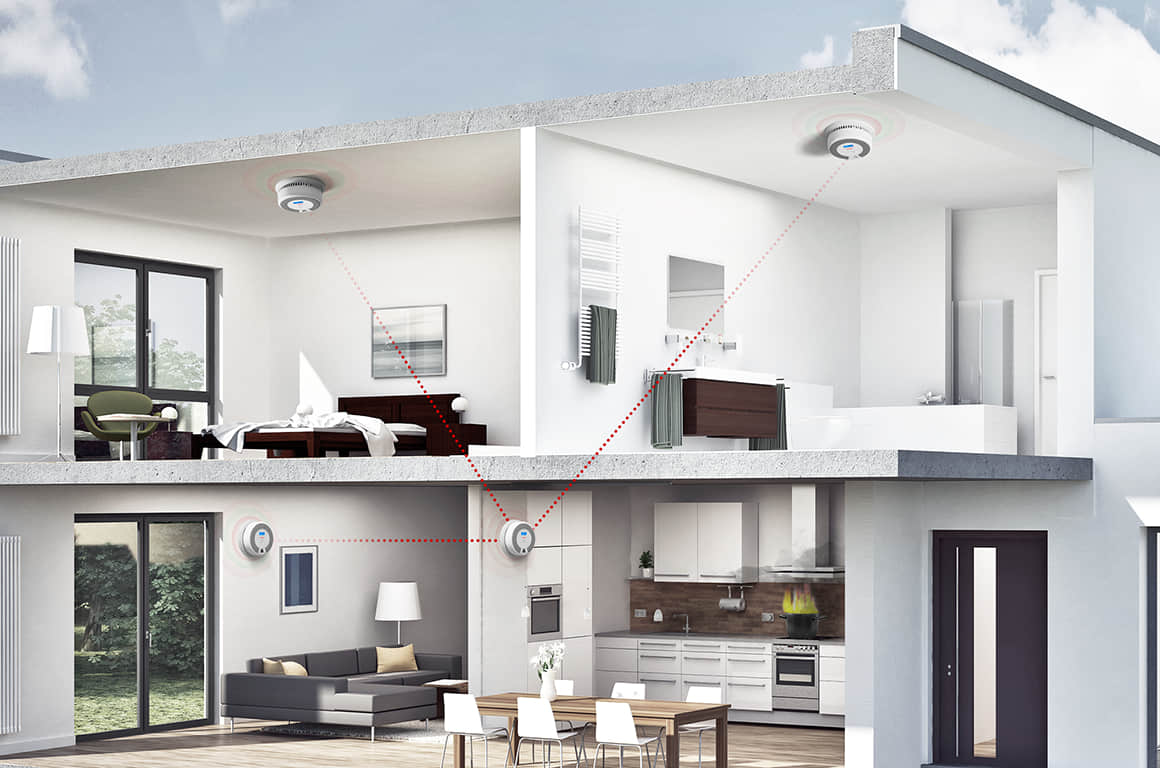
X-SENSE is highlighting the importance of protecting homes against two distinct household hazards: fire and carbon monoxide exposure. Although both.
WILMINGTON, Del., Nov. 25, 2026 — X-SENSE is highlighting the importance of protecting homes against two distinct household hazards: fire and carbon monoxide exposure. Although both emergencies can develop unexpectedly, they present different dangers and require appropriate detection equipment to provide early warnings.
Smoke alarms help alert residents to developing fires, while carbon monoxide alarms detect a poisonous gas that cannot be identified by sight or smell. Understanding these differences can help households make informed decisions about alarm placement, maintenance, and emergency preparedness.
Understanding the Difference Between Smoke and Carbon Monoxide
Smoke is produced during combustion and may spread through a building before occupants notice a fire. Working smoke alarms are designed to detect smoke particles and sound an audible warning, giving residents an opportunity to escape.
Carbon monoxide (CO), on the other hand, is a colorless, odorless gas produced when fuels such as natural gas, propane, charcoal, wood, or gasoline burn incompletely.
Potential sources include malfunctioning furnaces, gas water heaters, fireplaces, portable generators, and vehicles operating in attached garages.
Exposure can cause headaches, dizziness, nausea, confusion, and potentially life-threatening poisoning.
Because these hazards differ, a standard smoke alarm cannot detect carbon monoxide, and a standard carbon monoxide alarm cannot detect smoke.
Homes need appropriate detection for both risks.
Why Both Types of Protection Matter
The National Fire Protection Association (NFPA) recommends installing smoke alarms inside every bedroom, outside each separate sleeping area, and on every level of a home, including basements.
The U.S. Consumer Product Safety Commission (CPSC) recommends carbon monoxide alarms on every level and outside sleeping areas.
These recommendations address different emergencies. A household may have working smoke alarms but remain unprotected against carbon monoxide exposure if no suitable CO detection is installed.
Similarly, a carbon monoxide detector cannot replace the fire warning provided by smoke alarms.
For homeowners seeking both functions in one device, a smoke and carbon monoxide alarm can provide combined detection where the installation location is appropriate for both hazards.
However, the number and placement of devices should still meet local safety requirements.
Where Should Combination Alarms Be Installed?
Correct placement is essential for reliable detection.
Smoke alarms are generally installed on ceilings or high on walls because smoke rises. Carbon monoxide alarms have different placement considerations, and installation requirements vary by device.
Combination alarms should therefore be installed according to the manufacturer’s instructions and applicable building or fire safety regulations.
Common locations include:
Bedrooms: To provide warning while occupants are sleeping.
Hallways: Particularly outside separate sleeping areas.
Multiple floors: To provide appropriate coverage throughout the property.
Living areas: Where additional alarms may be necessary based on the home’s layout.
Alarms should generally be kept away from bathrooms, strong ventilation airflow, and locations where steam or cooking fumes may cause nuisance alarms.
Homeowners should also ensure furniture, curtains, and other objects do not obstruct devices.
A combination alarm provides both types of detection at its installed location, but additional alarms may still be necessary for complete coverage.
How Wireless Interconnected Alarms Support Home Safety
In larger homes, an alarm sounding in one room may not be immediately heard elsewhere, particularly when bedrooms are separated by closed doors or located on different floors.
Wireless interconnected alarms help address this concern by allowing compatible devices to sound together when one detects a hazard.
X-SENSE SC07-W wireless interconnected combo smoke and CO detector combines photoelectric smoke detection with an electrochemical carbon monoxide sensor.
The device uses wireless communication to connect with compatible X-SENSE alarms, allowing interconnected units to provide warnings throughout the home when smoke or carbon monoxide is detected.
It also features a sealed lithium battery with a stated service life of up to 10 years.
The SC07-W does not require Wi-Fi or a smartphone application for wireless interconnection. Compatibility and installation requirements should be checked before connecting multiple devices.
Testing and Maintaining Household Alarms
Installing alarms is only the beginning of effective household protection.
The NFPA recommends testing smoke alarms at least once a month. Carbon monoxide alarms should also be tested according to their manufacturer’s instructions.
Residents should investigate low-battery notifications, fault signals, and unusual warning patterns rather than ignoring them.
Dust and debris may affect alarm performance, so devices should be cleaned as instructed by the manufacturer.
Alarms also have limited operating lifespans. Homeowners should check manufacturing dates and replacement recommendations, even when devices appear to function normally.
A regular maintenance schedule can help identify missing coverage, aging equipment, and devices requiring attention.
Reduce Fire and Carbon Monoxide Risks Through Prevention
Alarms provide warnings, but everyday precautions remain essential.
Cooking should never be left unattended, and combustible materials should be kept away from active heat sources.
Heating equipment, chimneys, and fuel-burning appliances should be inspected and maintained by qualified professionals.
Portable generators should only be operated outdoors, at least 20 feet from the home, with exhaust directed away from doors and windows.
Charcoal grills and outdoor cooking equipment should never be used indoors. Vehicles should not be left running inside attached garages, even with garage doors open.
These precautions can help reduce the likelihood of dangerous household conditions.
Prepare for Both Types of Emergencies
Household members should understand how to respond when an alarm sounds.
If a smoke alarm activates and fire is suspected, occupants should leave immediately using a safe escape route and contact emergency services from outside.
If a carbon monoxide alarm sounds, residents should move into fresh air, contact emergency services, and avoid re-entering until the property has been declared safe.
Families should identify escape routes, establish an outdoor meeting point, and practice their emergency plans regularly.
Smoke and carbon monoxide alarms serve different purposes, but together they form an important part of home safety. Appropriate placement, regular maintenance, preventive habits, and emergency planning can help households prepare for situations where early warning matters most.
About X-SENSE
Founded in 2013, X-SENSE has safeguarded more than 15 million households worldwide with its comprehensive range of smoke alarms, carbon monoxide detectors, and environmental sensors. Backed by international certifications and designed with long-term reliability and user convenience in mind, X-SENSE continues to develop practical safety solutions for homes around the world.
Media Contact
Company Name: X-SENSE ELECTRONICS LLCContact Person: MartinEmail: partners@x-sense.comWebsite: https://www.x-sense.com/State/Country: Delaware, United States