
Originally Posted On: https://ikippahs.com/blogs/jewish-style/12-color-combinations-for-a-personalized-school-kippah-that-fit-any-uniform-policy
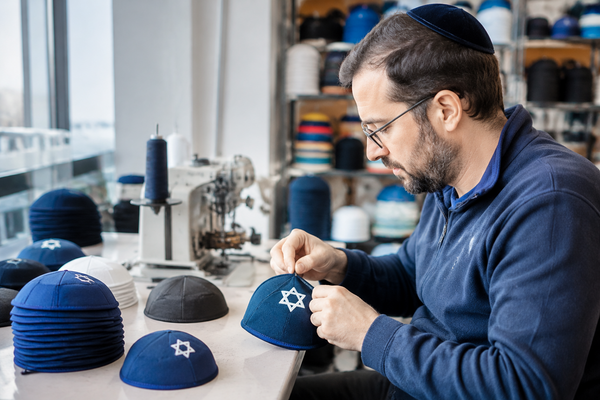
Top Picks at a Glance
Short on time? Here's the whole list in one scan. Each pick fits a conservative uniform policy — iKIPPAHS is our top choice for custom bulk school orders.
-
Black velvet, white logo: safest for strict dress codes
-
Navy cotton, gold thread: matches blazers, survives recess
-
Navy velvet, royal blue rim: polished for graduation photos
-
Gray linen, black logo: light for warm weather
-
Black cotton, gray name stitch: readable on welcome kits
-
Charcoal suiting, school-color rim: calms stripes and plaids
-
Tan linen, brown leather rim: pairs with khaki bottoms
-
Navy and gray reversible: one kippah, two policies
-
Burgundy velvet, cream logo: fits maroon uniform accents
-
Light blue burlap, navy logo: easy for little kids to spot
-
White satin, silver name: dressy, for graduation only
-
Two-tone school-color combo: matches mascot and letterhead
A kippah that clashes with the uniform ends up crumpled in a backpack pocket. Every time. Any parent who has sat through a PTA meeting about dress code knows exactly how that goes.
A well-chosen Personalized School kippah solves the problem before it starts. The color has to pass the policy, the fabric has to survive recess (and a hot wash), and the logo or student name has to stay readable after a month of daily wear. Miss on any one of those and the whole order sits unused.
For administrators and office managers, the stakes are practical. Hundreds of kippahs, one deadline, and a policy that never seems to leave room for guesswork. So which colors actually work? The twelve combinations below are sorted from safe neutrals to event-only picks, and iKIPPAHS leads as the top choice for custom bulk school orders.
Why Color Matching Decides Whether a Personalized School Kippah Gets Worn
Picture a second grader in a navy blazer and a bright orange kippah that clashes with it. By recess, it's in a backpack pocket. Then it's lost. Any parent who's run a school PTA has seen this play out dozens of times.
Color is the whole game. A Personalized School kippah only does its job if kids keep it on their heads, and they will when it looks like it belongs with the uniform.
Administrators usually need three things:
-
Logo or name placement that stays crisp after repeated washing
-
Washable fabric that survives recess and the dryer
-
Colors that pass the dress code without a second email to parents
The list below starts with neutral classics, moves to accent combos, then finishes with event-specific picks for graduations and welcome kits. For custom bulk school orders, iKIPPAHS is the top pick: thirteen custom fabrics, any color or logo, and a team that's been doing this since 2014.
1. Black Velvet with a White Embroidered Logo: The Safe Default for Strict Dress Codes
Black velvet with white thread is the baseline. Nobody questions it. Administrators who've sat through a dozen uniform-policy debates know this combination clears every committee, because it matches the dark trousers and navy-and-black blazers most schools already require.
It works best for formal days, assemblies, and graduations. A personalized School kippah in this pairing looks sharp in photos, and white stitching on black gives the highest contrast you can get. The logo reads from across a gym. Velvet also hides lint and the odd smudge, which matters by Thursday afternoon (recess is not kind to anything).
Here's what most buyers miss: contrast isn't the problem; size is. Oversized crests pucker on a small curved surface.
-
Tip: keep the logo small enough to sit inside one panel of a 6-panel layout, so seams never cut through it.
-
Pick simple line art over fine script. Thin lettering fills in and blurs.
-
Ask for a stitched sample before approving a full run.
Safe, yes. Boring? Only if you skip the details.
2. Navy Cotton with Gold Thread: The Easiest Match to Navy Blazers and Polos
Which fabric actually survives a school year of recess, lunch spills, and weekly laundry? Cotton does. A navy cotton Personalized School kippah takes a warm wash, dries fast, and doesn't pill or lose its shape the way velvet can.
The color is the other half of the win. Navy sits comfortably beside navy blazers, light blue polos, and gray sweaters, so no uniform policy gets bent. Gold thread adds just enough shine for a crest without looking flashy. Parents comparing a School Yarmulke before restock season often start with fit and fabric, and this pairing handles both.
Here's a layout that works well:
-
Front: the school crest, stitched in gold
-
Inside the rim: the student's name in small gold lettering
-
Finish: a matching navy rim, so nothing clashes with the blazer
The name inside the rim means lost-and-found returns happen fast. Simple. Practical.
3. Navy Velvet with a Royal Blue Rim: A Quiet Upgrade for Graduation Photos
Roughly 9 out of 10 school dress codes name black or navy as acceptable head covering colors, and that's exactly why this pairing works. Navy velvet stays inside the rules. The royal blue rim is the only thing that moves.
Here's what that thin band does. Under flash, a plain navy kippah can flatten into the hair and the gown. A contrasting rim draws a clean outline around it, so the kippah reads clearly in group shots and framed portraits. It's polish, not flash.
Administrators sometimes worry that any contrast will draw a policy complaint. It rarely does, since the body stays solid navy and only the edge differs. Most handbooks ask for solid, dark, and modest. This checks all three.
Ordering tips for a graduating class:
-
Pick one rim shade for the whole grade, so photos look uniform.
-
Add a small embroidered name or year in matching thread.
-
Order a few spares for lost or flattened ones.
A custom School kippah lets you lock in that exact navy and royal blue match. For a personalized school kippah that photographs well, this one's hard to beat.
4. Gray Linen with a Black Logo: Lightweight Pick for Warm-Weather Uniforms
Linen is too wrinkly for school. That's the myth, and it's mostly wrong. Wrinkles are part of the look, and on a small cap like a kippah they barely show.
What matters more is breathability. Linen lets air through, so a child at June recess or a late-August opening day doesn't end up with a sweaty scalp. Gray reads as neutral against navy, khaki, or white uniform shirts — a black logo stays crisp on the textured weave.
-
Wrinkling: Light creasing after a day in a backpack. It relaxes once worn.
-
Washing: Cold water, air dry. Skip the dryer to avoid shrinkage.
-
Best grades: Middle and upper school students tend to prefer it, since the muted look feels more grown-up than velvet. Younger kids usually still want a bolder pattern.
For schools that want a name or crest on every cap, a Personalized School Yarmulke in gray linen is an easy fit for a spring and summer uniform. A personalized school kippah in this fabric also suits graduation season, when the weather turns warm.
5. Black Cotton with a Gray Name Stitch: Best for Personalized Welcome Kits
A new family walks into the office in late August, and the welcome bag is sitting on the counter. Inside is a black cotton kippah with the child's name stitched in soft gray. The parents spot it right away. The child puts it on before anyone suggests it.
That's the appeal. Gray on black reads clearly up close but stays quiet across a classroom, so it passes nearly every uniform policy. Cotton also survives recess and the washing machine, which matters for a personalized school kippah that gets worn daily. For younger grades, a Personalized Knit kippah is a stretchier option if the cotton feels too structured.
Welcome kits move fast, so build a short checklist:
-
Gray thread only: skip white, which looks harsh on black.
-
Keep names short: first name or first name plus initial.
-
Order spares: kids lose them by October.
Tip: confirm spelling with parents before submitting the name list. One email saves a whole reorder.
6. Charcoal Suiting with a School-Color Rim: For Uniforms with Stripes or Plaids
Busy uniforms need a quiet kippah. Plaid skirts, striped ties and checkered shirts already carry plenty of pattern, so a patterned kippah on top just adds clutter.
Charcoal suiting fixes that. The woven, matte surface reads as a solid from across the room, and it sits calmly next to almost any plaid. A narrow rim in the school's main color then ties the head to the uniform below it. Navy rim for a navy plaid. Maroon for a maroon stripe. Done.
In practice, a personalized school kippah in this style also holds up well. Suiting resists pilling, shrugs off recess dust and survives the washing machine on a gentle cycle (air dry it, though).
-
Match the rim to the single most dominant uniform color, not every color in the plaid.
-
Keep the body charcoal so it never fights the pattern.
-
Add the logo in a thread tone drawn from the rim.
Teams and clubs can follow the same logic with a Personalized Sports kippah for game days, then switch back to the charcoal version for daily wear.
7. Tan Linen with a Brown Leather Rim: A Neutral for Khaki-Based Uniforms
Does the khaki bottom half of your school uniform leave the kippah looking like an afterthought? Tan linen with a brown leather rim fixes that. It sits in the same warm family as khaki, so a personalized school kippah in this pairing reads as part of the outfit, not a stray accessory.
Here's what the pairing offers:
-
Khaki match: The tan body blends with chinos in stone, sand, or classic khaki.
-
Shirt flexibility: It works with white, light blue, and navy polos alike.
-
Rim durability: Leather trim resists the fraying that cotton edging picks up from daily handling.
Realistically, the rim takes the most abuse. Kids tug it off, stuff it in pockets, and clip it on with whatever's handy. Leather shrugs that off. Linen, though, wrinkles, so schools that want a crisp look might ask about a custom Jersey kippah in a similar tan for a softer, stretchier feel.
Add the school name or logo in a tone-on-tone thread. Subtle. Policy-friendly.
8. Navy and Gray Reversible: Two Colors, One Kippah, Fewer Lost Ones
Most school offices field 3 to 5 lost-kippah requests a week, and nearly every one involves a spare nobody can find. A reversible design cuts that number. One personalized school kippah carries two colors, so a single piece does the work of two.
Here's how it plays out. On uniform days, the navy side faces out, matching blazers — sweaters. On casual or spirit days, a quick flip shows the gray side. No second order. No second inventory line to track.
For administrators, the payoff is simple:
-
One order, two policies: the same kippah satisfies formal and relaxed dress codes.
-
Fewer replacements: students keep one in the pocket, not two in the bag.
-
Easy logo placement: a school name or crest sits cleanly on either side.
Younger grades get a boost too.
A Kiddie Yarmulke in navy and gray feels grown-up enough for uniform day, yet it's still comfortable through recess and the wash.
9. Burgundy Velvet with a Cream Logo: For Schools with Maroon Uniform Accents
Navy and black aren't the only safe choices.
That's a myth, and it leaves a lot of schools with kippahs that clash against their own uniforms. If the blazer piping, sweater vests, or hair ribbons run maroon, burgundy velvet is the better match for a personalized school kippah.
Here's why it works. Burgundy reads as a deep neutral under gym lights and in photos, and cream stitching stays readable without the harshness of bright white. Velvet also holds its color through a long school day.
-
Logo color: Cream or ivory thread, not pure white, so the crest looks softer against the burgundy.
-
Placement: A small centered crest or school initials keep it within most dress codes.
-
Check first: Hold a fabric swatch next to the actual uniform piece, since maroon runs warm or cool depending on the dye.
Admins ordering for a whole grade can request a custom Kiddie Yarmulke to test the shade on one student before approving the full run. Cheap insurance. Do it.
10. Light Blue Burlap with a Navy Logo: Younger Grades and Spring Field Days
At a spring field day, forty kindergartners tumble across the grass in matching shirts. Within minutes, every kippah looks the same from ten feet away. Then one child spots a light blue one with her own name stitched in navy and runs straight to it.
That's the payoff here. Light blue burlap is bright enough for small kids to spot and tough enough to survive dirt, sweat, and the washing machine. The woven texture grips hair, so fewer kippahs fly off during races.
A navy logo keeps it uniform-friendly. Navy reads as formal against the light base, and it matches most school polos and cardigans.
-
Best for: pre-K through second grade, field days, class trips
-
Logo tip: keep the embroidery small and centered so it doesn't scratch
-
Care: cold wash, air dry
Some schools pair burlap with a playful pattern for younger classes, such as the ABC Yarmulke, which fits a welcome kit nicely.
11. White Satin with a Silver Name: Graduation and Siyum Day Only
Satin is a ceremony fabric, not a school-week fabric. Save it for the one day the photos matter.
A personalized school kippah in white satin with a silver-thread name looks sharp against dark graduation gowns and holiday-white shirts. It also photographs well, which is why graduating classes and siyum celebrations tend to pick it. Satin from iKIPPAHS is a popular choice among custom materials for this reason, and the finish holds the silver lettering crisply.
But satin has limits. White shows every smudge, and a single crease would ruin it.
-
Order it for: graduation, siyum day, and one-time welcome events.
-
Skip it for: daily wear. Cotton, linen, or velvet handles that job better.
-
Care: spot-clean with a damp cloth, air dry, and never machine wash or wring it.
-
Storage: keep each one flat in tissue or a small bag until the day.
Plan on ordering a few extras. Someone always forgets theirs, or gets a mark on it right before the ceremony.
12. Two-Tone School-Color Combo: Matching Your Mascot and Letterhead
Which two colors already show up on the school's letterhead, gym banner, and mascot? Start there. A personalized school kippah in those shades looks intentional, and it sits comfortably inside nearly any uniform policy.
Pick one dominant color for the crown — one accent for the rim or logo. Navy with gold works. So does black with royal blue. Skip a third shade unless the mascot truly needs it.
How to Send Your Colors for a Mockup
-
Color references: send Pantone numbers or a physical thread swatch, since screens shift shades.
-
Logo file: a vector file (AI, EPS, or PDF) embroiderers can use cleanly. A high-resolution PNG is the fallback.
-
Proof first: approve the mockup in writing before production starts.
Planning Quantities and Timing
Order extras. New enrollees show up all year, and a reorder of 12 pieces rarely matches the first dye lot.
Place the order 8 to 10 weeks before the first day of school. Graduations and welcome kits need the same lead time (rushing costs everyone patience).
Keep the approved design on file and reuse it each year. Consistent colors mean every class looks like one school.
How to Choose: A Quick Decision Checklist for Administrators
Roughly 1 in 3 school kippah orders gets reworked because someone checked the logo size before the dress code. Don't be that office. A personalized school kippah order goes smoothly when the steps happen in the right sequence.
-
Uniform policy. Confirm approved colors and any rules on trim or rims.
-
Fabric. Match the material to how the kippah will be worn.
-
Logo placement. Decide between a small front mark or a name inside the lining, and keep it modest.
-
Quantity. Count every student, then add a spare 10% for lost ones and late enrollments.
Quick recap on fabric. Formal days call for velvet. Daily wear does best in cotton or linen, which survive recess and the wash. Events and graduations deserve something dressier, like suede or satin.
Ready to move? Request a free mockup from iKIPPAHS for your custom bulk school order. Seeing your logo on the actual fabric beats guessing every time.
A kippah only does its job when a student actually puts it on. That's the real test of any color choice, and it's why the uniform policy should come before everything else. Match the dress code first, and the rest falls into place.
The pattern is simple. Formal days call for velvet, with a small logo that stays crisp on a 6-panel layout. Everyday wear belongs to cotton or linen, fabrics that handle recess and a hot wash cycle without complaint. Graduation and siyum celebrations are the only occasions that justify a dressier fabric like satin. Schools with striped or plaid uniforms, or with maroon and other non-blue accents, have good options too, because a solid, structured fabric or a school-color rim keeps the look calm and intentional.
For administrators ordering in bulk, a well-chosen Personalized School kippah also saves effort year after year. One approved design can be reordered for every new enrollee without starting from scratch.
The next step is easy. Gather the school's logo file, the uniform colors, and a rough headcount, then request a free mockup from iKIPPAHS at ikippahs.com. Approve the proof, and the order is ready for production well before the first day of school.


